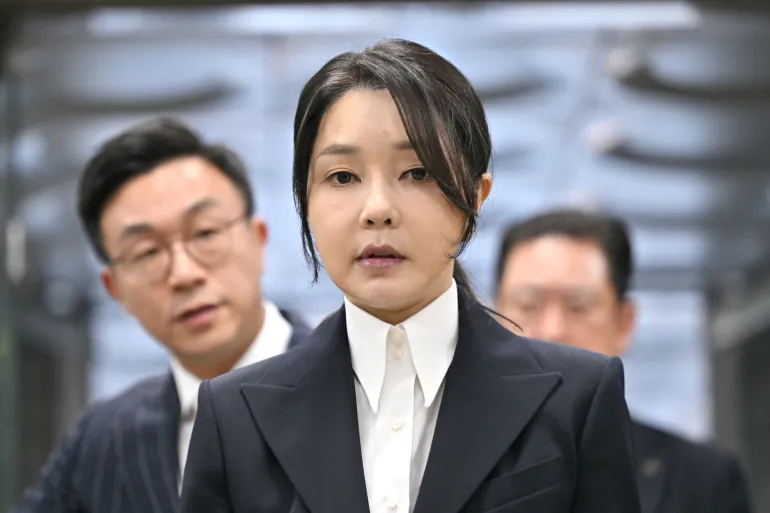
South Korea is on edge as the nation awaits a court ruling on whether to issue an arrest warrant for Kim Jung-sook, the country’s former first lady. The case has drawn widespread attention, raising questions about accountability and justice. Here’s what you need to know about the unfolding situation.
The Allegations: What’s at Stake
Kim Jung-sook, wife of former President Moon Jae-in, faces allegations of misusing public funds and influence peddling. Prosecutors claim she used her position for personal gain. Additionally, they accuse her of improper involvement in government projects.
The Arrest Warrant Request
Prosecutors have formally requested an arrest warrant, citing the need to prevent evidence tampering. They argue that Kim poses a flight risk. Moreover, they emphasize the seriousness of the charges against her.
Public Reaction: A Nation Divided
The case has sparked intense debate among South Koreans. Supporters of Kim argue that the charges are politically motivated. On the other hand, critics demand accountability, insisting that no one should be above the law.
Legal Process: What’s Next
The court must now decide whether to grant the arrest warrant. Judges will weigh the evidence and assess the risk of Kim fleeing or obstructing justice. If approved, she will be taken into custody pending trial.
Historical Context
This case is part of a broader trend in South Korea, where former leaders and their families often face legal scrutiny after leaving office. It highlights the country’s commitment to holding public figures accountable.
Political Implications
The ruling could have significant political ramifications. It may impact public trust in the government and influence upcoming elections. Furthermore, it could shape the legacy of Moon Jae-in’s presidency.
Looking Ahead: A Test for Justice
The court’s decision will be a critical moment for South Korea’s justice system. It will test the nation’s ability to balance fairness and accountability. Regardless of the outcome, the case underscores the importance of transparency in governance.
In conclusion, South Korea’s wait for a ruling on the arrest warrant for Kim Jung-sook reflects a pivotal moment in the country’s political and legal landscape. Transitioning from allegations to accountability requires careful deliberation, but it is essential for upholding the rule of law. The decision will not only shape Kim’s future but also set a precedent for how South Korea addresses allegations against its leaders.